
AIC FACTORYOPTIMIZATION
Throughput, Production Ratios & Efficiency Strategies
Last updated: 2026-02-17
Credit: This guide is based on research and analysis by u/Ra1nfr0g from the r/Endfield community. Endfield Hub has expanded and organized this content with permission.
Port Space Maximization
The primary limiter of throughput is how many output ports you can fit. Since all ports and conveyors flow at 0.5 unit/s, there's no way to improve upstream throughput beyond port count. Maximize output ports for maximum throughput.
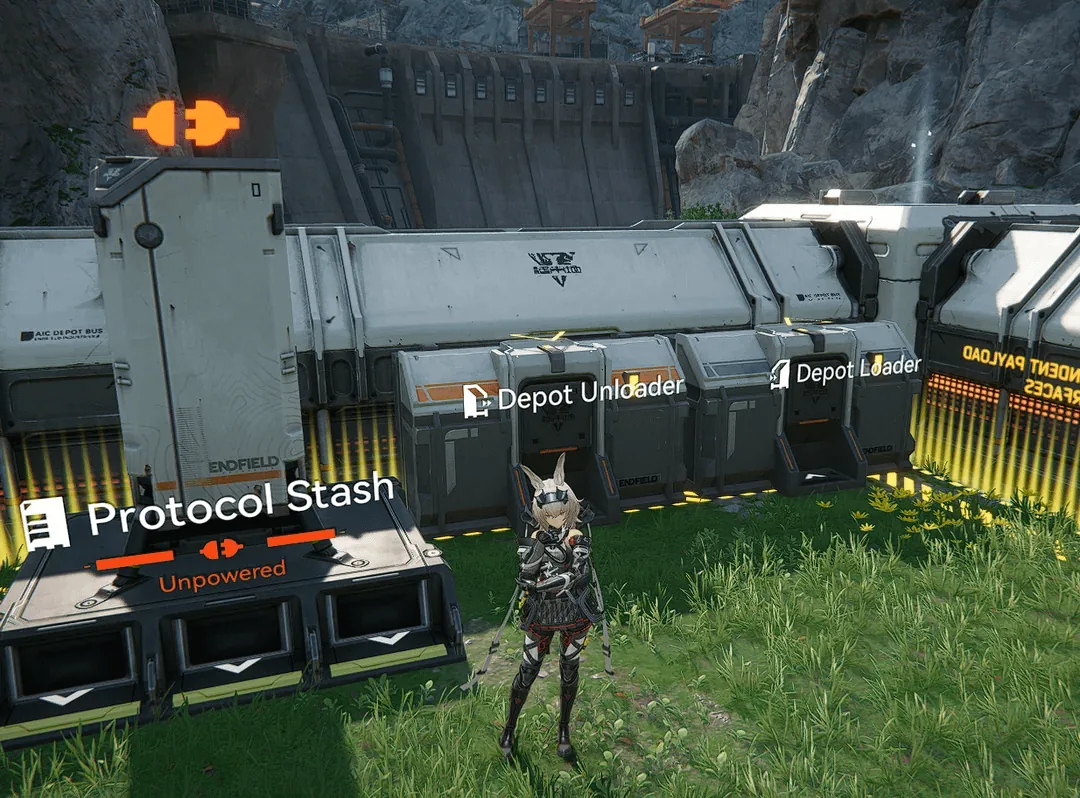
Depot Loaders Are Traps -- Don't Use Them
Simple math: an output port at the PAC takes 3 tiles, the same as a depot unloader. You get 0.33 ports per tile. In the PAC input port, you get 7 on a 9-tile side. That's 0.77 ports per tile.
Using a depot loader gives you worse ports per tile (0.33 vs 0.77) AND you lose the opportunity to use a depot unloader in that space. Every depot loader decreases your throughput ceiling.
A Protocol Stash gives you 0.33 ports per tile (3 depot inputs for 9 tiles) without the opportunity cost. It's strictly better.
Don't Waste Ports
The only resource that effectively multiplies port throughput is grinding sandleaf to make seeds or powder. 3 sandleaf powder from 1 plant = 3x throughput increase. If you store powder then pull from storage, you waste that multiplier.
Throughput Multipliers
When you're port-limited, these multipliers are your only way to increase effective throughput. But you must use them correctly.
Sandleaf → Powder
1 Sandleaf → 3 Sandleaf Powder via Shredder. This is a 3x throughput multiplier. Process on-site before storing.
Plants → Seeds
Seed-Picking Unit: 1 Plant → 2 Seeds. This is a 2x throughput multiplier. Loop seeds back to planting.
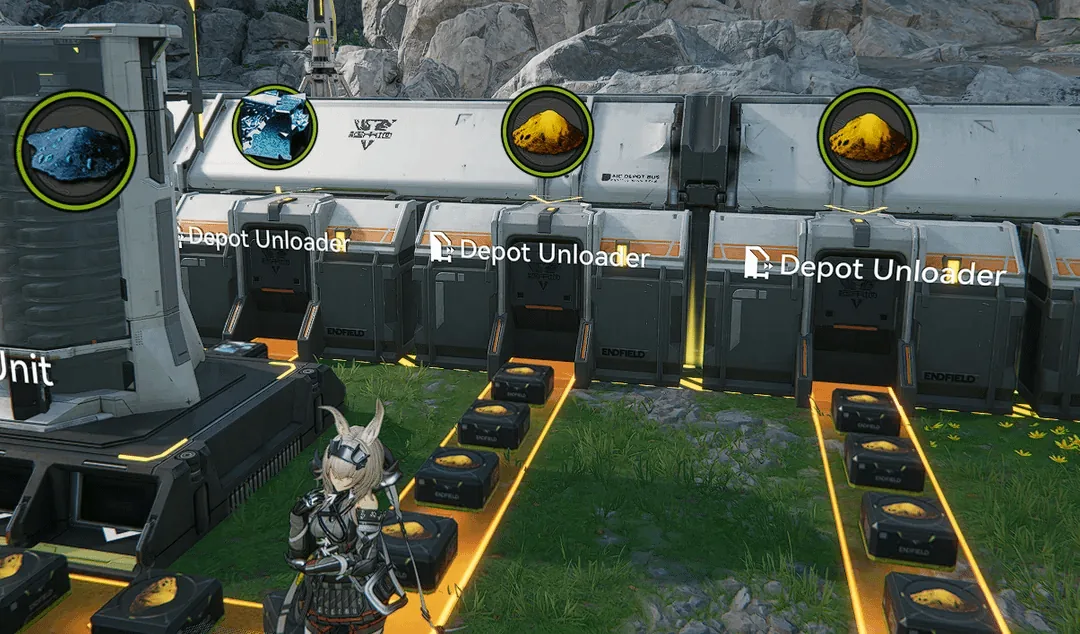
Golden Rule: Don't Store Multipliers
Any throughput multiplier should be used immediately. If you store it in the depot and pull it out later, you throw away your throughput advantage. Process at the source, then transport the finished product.
Machine Ratio Calculations
Underfeeding machines is one of the most common efficiency killers. You must match upstream output to downstream demand.
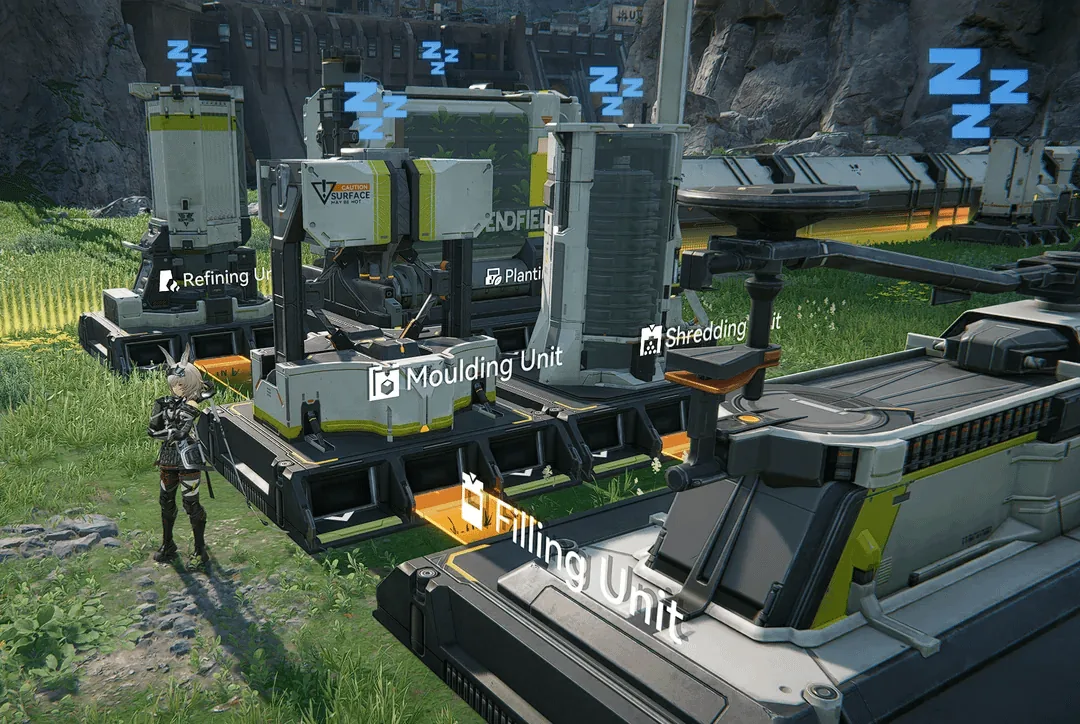
The "Layman's" Filling Machine Problem
A common design: 1 ferrium/amethyst line feeds a moulding machine that feeds a filler. Seems fine, but it's a bottleneck.
Here's why: it takes 2 units of intermediates to make 1 bottle. If you only feed 1 unit, you're running the moulding machine at 50% utilization.
A Filling Machine using Ferrium bottles requires 10 bottles + 10 powder every 10 seconds. Belt moves max 5 units per 10 seconds. Need 10 units per 10s for JIT.
The Math
- - Filler needs 10 bottles + 10 powder in 10s
- - Belt moves max 5 units per 10s
- - You get: 2.5 bottles (50% utilization) + 5 powder (100%)
- - Throughput = 25% of potential!
Feed Your Machines!
There's no free lunch. If you're port-limited and trying to cram machines, 2 machines at 50% give the same output as 1 at 100% -- but take more space. Don't split inputs from a port across multiple machines; you're just distributing the same input, not increasing throughput.
Conveyor Belt Logic
Every conveyor belt has a rate of 0.5 unit/s. This is unchanging. Optimize by matching machine speed to belt capacity.
Fast Machines Need Fast Lanes
Refineries and processors operate at 0.5 unit/s -- same as belt speed. Each input/output should have its own bus. Merging causes backpressure (two machines fighting for belt space).
Slow Machines Take It Easy
Fillers and packagers take 10s to produce = 0.1 unit/s. Belt is mostly empty. Merge slow outputs together to maximize belt efficiency.
Splitters Are Division, Convergers Are Addition
Think of it mathematically:
- - Two-lane splitter = divide output by 1/2
- - Three-lane splitter = divide output by 1/3
- - Two-lane converger = add throughput of two lines
Bad: Merging fast lanes (1 + 1 onto 0.5 capacity = backpressure)
Good: Merging slow lanes (0.1 + 0.1 fits easily on 0.5)
The Wean Tax Technique
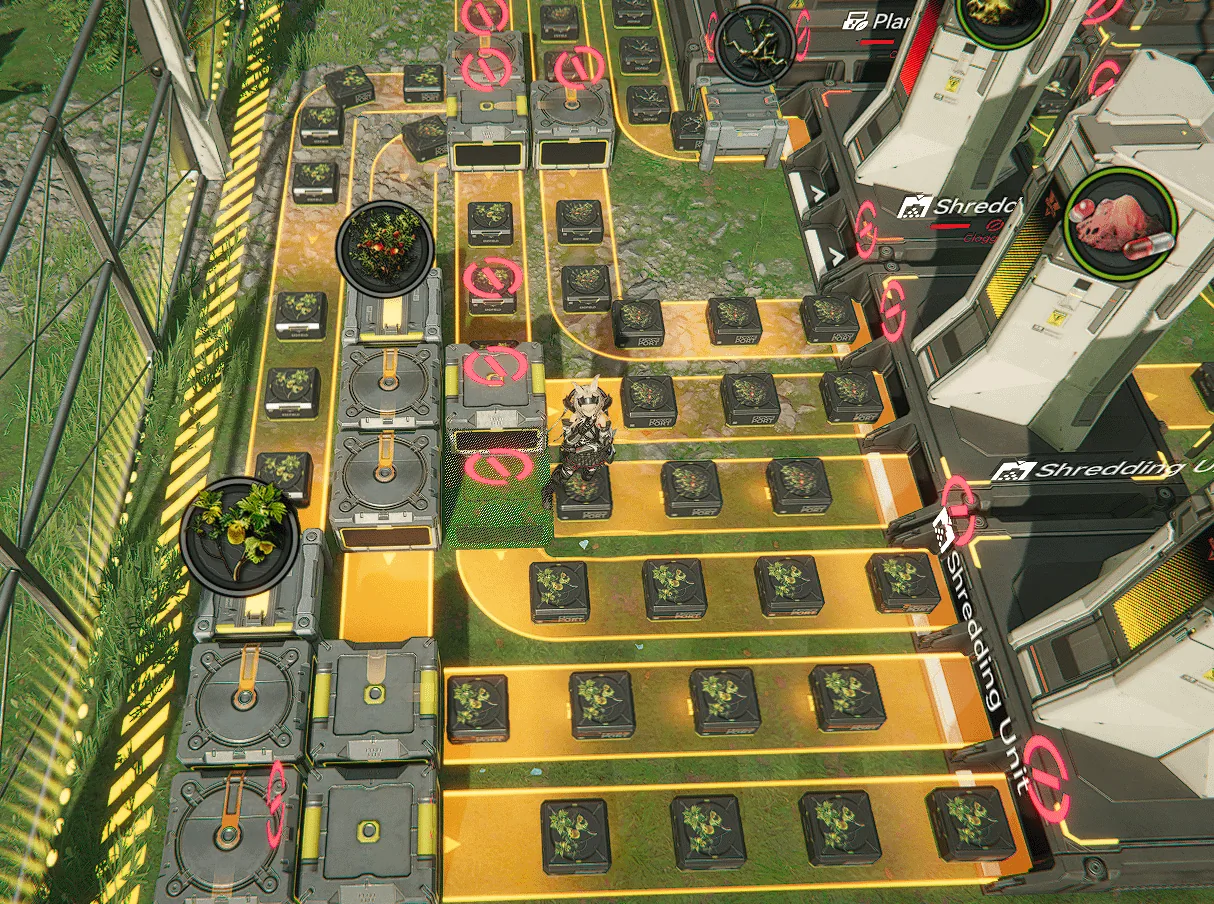
Chain splitters together to route small fractions of a line elsewhere. Taking 1/32 of an amethyst part line is negligible -- you pay a tiny cost to build up a buffer of crafting materials without degrading main line performance. This is how routing multiple belts off a machine works.

Tap through for today's price on the official store. Affiliate link, we may earn a commission.