CAMILLE DEEP DIVE: FIRST NON-STANDARD 6-STAR MALE OPERATOR | ENDFIELD 1.3
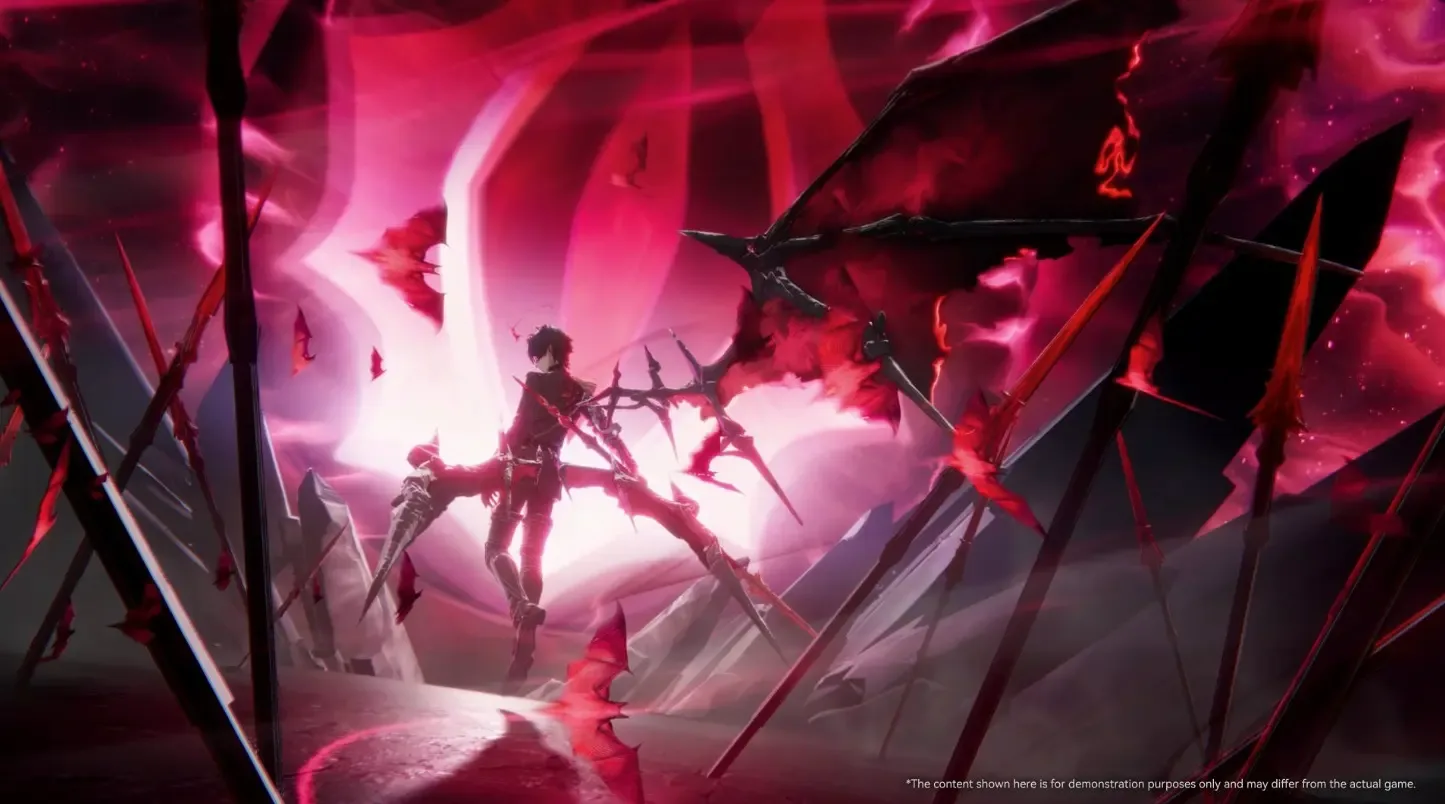
Table of Contents
TL;DR - Key Points
- Camille is the first non-standard 6-star male character in Arknights: Endfield — releases in Version 1.3 Phase 2 following Mi Fu’s Phase 1 banner
- Sankta/Sarkaz hybrid — a “Blood Hunter” from the floating city of Seš’qa, anchored to a tooth of Sami in the northern reaches of Talos-II
- Polearm Guard — introduces a brand-new spear weapon class focused on reach, stagger generation, and elite enemy control
- Element speculated Physical or Heat — positioned to slot into Shatter teams (with Cryo enablers like Last Rite/Yvonne) or Combustion compositions (with Laevatain)
- Narrative anchor for Update 3 — pursues his fallen brother, “kin’s shadow,” bridging the Wuling arc into the wider Talos-II crisis
- Pull priority: Highly Recommended — save Orundum for the 120-pull guarantee; he is projected to remain meta-relevant for several patch cycles
Related read: F2P DPS Progression: Weapons & Gear goes deeper on meta analysis.
Operational Profile: The Sankta Blood Hunter
Camille’s release marks a definitive shift in Arknights: Endfield’s character cadence. After roughly a year of female-dominated 6-star drops, the developers are finally delivering the long-requested high-rarity non-standard male operator — and they are doing it with a character whose racial heritage, weapon class, and narrative weight all break new ground simultaneously.
He arrives in Phase 2 of Version 1.3, the back half of the “Spring Dawn” expansion cycle, after Mi Fu headlines Phase 1. That structure is deliberate. Mi Fu closes out the localized Wuling City storyline; Camille opens the door to the wider, darker frontier.
Confirmed Specifications
| Attribute | Specification | Reliability |
|---|---|---|
| Codename | Camille | Confirmed |
| Rarity | 6-Star (Hex-Star) | Confirmed |
| Release | Version 1.3, Phase 2 | Confirmed |
| Gender | Male (first non-standard 6-star male) | Confirmed |
| Primary Race | Sarkaz (Vampire / Blood Demon) | Confirmed |
| Secondary Race | Sankta (hybrid lineage) | High Speculation |
| Origin | Seš’qa (Floating City) | Confirmed |
| Class | Guard (Striker/Vanguard niche) | Confirmed |
| Weapon | Polearm (Spear) | Confirmed |
| Element | Physical (primary) / Heat (secondary) | High Speculation |
The visual identity is a deliberate study in contrast: short green hair, refined posture, and an aristocratic spear stance offset by massive crimson wings that mark him unmistakably as Vampire-tribe Sarkaz. The wings are not merely cosmetic decoration — they are the semiotic load-bearing element that telegraphs his racial duality before a single line of dialogue is spoken.
See also: Version 1.3-1.4: Mi Fu & Sui Shisan Meta Analysis for more on camille.
The Seš’qa Enigma: A City on a Tooth
Camille’s home is one of the most lore-dense reveals of the 1.3 cycle. Seš’qa, the floating city, is described as the primary representative of Sarkaz cultural traditions on Talos-II — a kind of “City of Witchcraft” or “Witching Hour” where the fragmented Sarkaz sub-races (Vampires, Nachzehrers, Lich) have finally found cohesion.
Anchored to Sami
Seš’qa is not a landship and not built on a conventional landmass. It is anchored to a gargantuan tooth of Sami, the entity whose Primitive Memory shapes the northern reaches of Talos-II. That foundation isn’t decorative worldbuilding — it implies a biotechnological integration well beyond what Wuling City or the Endfield Industries outposts have achieved, and it ties the city’s inhabitants directly to the moon’s deep environmental forces.
Inside Seš’qa, the Sarkaz Royal Courts hold grand parades, the Nachzehrer company runs industrial operations, and specialized roles like the Blood Hunter maintain internal governance over the unique biological burdens of the population. The “Kazdelian dream” of a unified homeland has reached a stable — if isolated — fruition on the moon.
Why Witchcraft?
The “Witching Hour” reputation likely stems from Seš’qa’s high concentration of extreme Arts sensitivity. Where Endfield’s standardized technical divisions favor industrial Arts deployment, Seš’qa’s practitioners draw on ritualistic Arts rooted in the Blood Curse referenced in Camille’s biography. For the Endministrator, establishing diplomatic and operational relations with Seš’qa is a non-optional prerequisite for navigating the Update 3 crisis arc.
Racial Synthesis: The Sankta-Sarkaz Hybrid Paradox
This is where Camille’s design gets genuinely interesting. He is described as a “Sankta Blood Hunter” and a member of the Vampire Sarkaz tribe — a combination that, in the Arknights universe, should not exist easily.
The Sankta and Sarkaz share a common ancestor (the Teekaz) but were fundamentally diverged by the Precursor’s Personality and Cognitive Synchronization (PCS), which granted Sankta their luminous halos and wings while severing them from the Sarkaz collective consciousness.
Visual Trait Comparison
| Feature | Sankta Standard | Sarkaz (Vampire) Standard | Camille’s Observed Traits |
|---|---|---|---|
| Wings | Luminous, translucent | Leathery, crimson, physical | Large crimson wings |
| Halo | Constant luminous ring | Absent | Speculated “crown of thorns” |
| Ears | Humanoid | Pointed | Pointed (standard Sarkaz) |
| Eyes | Varied | Red / crimson highlights | Red highlights |
The most compelling theory is that Camille’s “halo” is not a standard Sankta manifestation but rather a crown of thorns composed of concentrated blood Arts — a feature historically associated with the Vampire King and the Crimson Court. If accurate, that would mean Camille is not just a hybrid but a high-ranking blood-Arts practitioner who has reached a synchronization level mimicking the angelic Sankta form.
The alternative reading is that he is a “Fallen” Sankta who survived on Talos-II by embracing latent Sarkaz ancestry. Sankta wings and halos are known to darken or vanish when an individual falls from the PCS network — typically through racial taboo violation. Generations of evolutionary adaptation to the moon’s environment, away from rigid Terran Sankta society, could plausibly produce exactly the phenotype Camille displays.
Either reading positions him as a direct narrative successor to historical figures like Cecilia, born of both Sankta and Sarkaz parents.
Narrative Trajectory: The Curse and the Kin
Camille’s story is built on a single, tragic hook:
“A hunter bound by his blood’s own curse. The prey he stalks, a kin’s shadow. Once beloved, now lost.”
That’s the cleanest character pitch the writers have shipped in months. Three lines, three load-bearing elements: the curse, the hunt, the lost brother.
The Brother Question
Camille’s primary mission is hunting his younger brother — now described as a “shadow.” The phrasing is precise: “kin’s shadow,” not “kin.” It strongly suggests the brother has succumbed to the Blood Curse, defected to a rival faction (potentially the Aggeloi or the Landbreakers), or been corrupted by one of the biological/Arts anomalies the moon is becoming known for.
This narrative does deliberate structural work for the game’s progression. The Wuling City arc — with its localized political conflicts and Zhuang Fangyi’s Overseer dynamics — closes out under Mi Fu. Camille’s hunt drags the Endministrator out of those city-state politics and into the frontier wilderness around Seš’qa, where the moon’s deeper mysteries are waiting.
Solitary Enforcer Archetype
His demeanor reads grim and melancholic — closer to a “duty as grim necessity” silhouette than the more socially integrated Endfield Industries operators like Ardelia or Lifeng. He represents an external force with its own laws and moral codes, accustomed to working in the shadows, tracking targets across vast distances, and making survival-level decisions about his own people. That tragic-hero positioning is exactly the kind of character writing that drives long-tail player attachment in the Arknights franchise.
Combat Mechanics: The Polearm Niche
As a 6-star Guard wielding a Polearm (Spear), Camille introduces a kinetic profile that no current operator occupies. Existing high-rarity melee units (Last Rite, the Endministrator) lean on Greatswords or standard Swords. Spear combat in Endfield’s five-weapon taxonomy (Sword, Greatsword, Polearm, Handcannon, Arts Unit) is expected to emphasize reach, precision, and rapid spacing.
Projected Tactical Profile
| Combat Aspect | Potential Mechanism | Tactical Benefit |
|---|---|---|
| Reach / Spacing | Extended polearm hitboxes | Safer engagement against elite Aggeloi |
| Aerial Mobility | Crimson wings in skill / combo animations | Verticality and gap-closing potential |
| Stagger Efficiency | High impact value on spear thrusts | Rapid shield-breaking on bosses |
| Elemental Infliction | Physical or Heat application | Synergy with Shatter or Combustion |
The official key art conveys “oppression” — which in Endfield gameplay terms typically translates to high poise-break values and battlefield zone control. As a 6-star, his multipliers are expected to be high enough to function as either a primary DPS or a powerful sub-DPS that enables the rest of the team’s burst windows.
Element Debate: Physical vs Heat
The community is split, and the answer materially changes his team-building niche.
If Physical: He becomes a critical Shatter-team component. Pair with Cryo enablers like Last Rite or Yvonne to trigger Shatter on frozen elites for massive defense-bypassing burst. This positions him as a direct companion to the current physical meta defined by operators like Pogranichnik.
If Heat: He focuses on Combustion stacking and Heat Arts amplification, slotting into a Laevatain Hypercarry composition that detonates explosive windows during stagger phases.
Initial theorycrafting from livestream “crumbs” suggests Camille doesn’t work as a standalone unit but multiplies everything you’ve already built in the right team. That’s a kit philosophy targeting endgame longevity rather than instant-clear power — likely including reaction amplification or unique buffs to other Sarkaz/Sankta operators. For a roster-by-roster look at who actually maximizes him — the Laevatain Heat core, the free Wulfgard enabler, and the premium Rossi hybrid — see our pre-release guide to the best operators to pair with Camille.
Banner Strategy: Mi Fu vs. Camille
Phase 2 placement is a deliberate engagement-retention move. Mi Fu in Phase 1 closes the Wuling arc; Camille in Phase 2 hooks players into the next narrative cycle. Both banners serve overlapping but distinct player interests.
| Parameter | Mi Fu (Phase 1) | Camille (Phase 2) |
|---|---|---|
| Narrative Weight | High (Wuling Conclusion) | High (Global Bridge) |
| Element | Heat / Physical (speculated) | Physical / Heat (speculated) |
| Niche | Burst Brawler / Gauntlets | Reach / Stagger / Polearm |
| Community Sentiment | Established NPC popularity | First non-standard 6-star male “shock value” |
Pity Mechanics Reminder
The Endfield pity system on these banners is standard: guaranteed 6-star at 80 pulls, with increased probability rolling from pull 60. Featured operator hard guarantee is the 120-pull spark. Given Camille’s “first” status and projected role as a long-term elemental lynchpin, F2P administrators are advised to:
- Skip weapon banners entirely this cycle
- Save Orundum to reach the 120-pull spark with margin
- Decide Mi Fu vs. Camille up front — splitting pulls across both banners is the worst outcome
If forced to pick one, Camille’s combination of unique weapon class, debut non-standard male status, and projected endgame relevance makes him the higher long-term-value pull for most accounts.
Long-Term Value: Future-Proofing
Endgame modes like Contingency Contract consistently demand specialized tools for managing enemy Stagger and Vulnerability stacks. Camille’s projected polearm kit — reach, stagger generation, controlled spacing — maps directly onto the toolkit that high-difficulty bosses will require as the level cap rises and Update 3 introduces more complex enemy archetypes.
Reaction-heavy combat means his actual ceiling depends on execution quality: precise dodge frames, tight rotation timing, stable input latency. A high-level Camille rotation will look something like:
- Opening: Apply Electric or Nature debuffs via support to shred resistances
- Setup: Use a Cryo enabler to apply solidification stacks
- Execution: Swap to Camille; use polearm reach to stay outside boss counter-attack range while landing high-impact thrusts
- Burst: Fire his Ultimate during the stagger window to maximize multipliers and detonate accumulated elemental effects
Any delay collapses the reaction window, so administrators should ensure stable performance before farming his upgrade materials.
Progression: Materials and Mastery Order
Upgrading a 6-star is resource-intensive. Based on existing 6-star melee progression paths, expect:
| Material | Purpose | Source |
|---|---|---|
| Protohedrons | High-level Skill Mastery | Skill Up Protocol Spaces |
| Protoprisms | Early Skill Upgrades | Skill Up Protocol Spaces |
| Blighted Jadeleaf | Elite Ascension / Breakthrough | Northern Wilderness nodes |
| Quadrant Fitting Fluid | Gear & weapon calibration | Industrial supply chains |
| T-Creds | Universal currency | Missions / base income |
Prioritize Strength and Agility (or potentially Will) on Talent Nodes early — these govern damage scaling and critical modifiers for polearm Guards. Talent Nodes also provide permanent attribute boosts and facility skills that improve account-wide efficiency.
Skill Mastery Hierarchy
- Battle Skill — highest priority; primary stagger-generation and elemental-application tool
- Ultimate Skill — burst window enabler during boss vulnerability phases
- Combo Skill — important if his kit gates reactions on specific combo triggers
- Basic Attack — lowest ROI; sustained pressure only
Community Reception and Cultural Significance
The announcement caused a measurable sensation, particularly among players who have felt the absence of non-standard male operators in the launch roster. The community consensus is that Camille’s design “mogs” most male characters in contemporary gacha competitors — mature, disciplined silhouette, weighted spear stance, and the crimson wings carrying genuine presence rather than feeling decorative.
What’s notable is how broad his appeal is testing. Players who don’t typically pull male characters have flagged interest “because cool is cool” — the design works as a generic character-power statement, not just a husbando-bait release. That cross-demographic pull is exactly what the developers needed if they want non-standard male banners to perform competitively going forward.
Camille’s banner performance will function as a litmus test. Strong numbers signal to the team that quality non-standard male operators have a market, likely accelerating diverse male archetype releases through 1.4, 1.5, and beyond. Weak numbers risk reverting to the female-dominated cadence of the launch year.
Strategic Outlook for Administrators
Camille is more than a roster addition. He is a foundational character redefining both the narrative and tactical landscape of Arknights: Endfield heading into Update 3.
Key takeaways:
- Narrative anchor — his pursuit of his brother and ties to Seš’qa are the primary catalysts for the Update 3 storyline. Essential for lore-invested players.
- Mechanical utility — the polearm reach/stagger niche is currently empty and projected to be vital for Contingency Contract and high-difficulty endgame.
- Economic value — first non-standard 6-star male, high-aura design, projected elemental synergies. Likely meta-relevant for several patch cycles.
- Lore depth — his Sankta/Sarkaz hybridization opens up the most interesting exploration of the PCS system since the Cecilia revelations.
For administrators planning the 1.3 cycle: skip weapon banners, lock Mi Fu vs. Camille decisions early, and save toward the 120-pull spark on whichever you choose. The hunter bound by blood is positioned to be one of the most impactful operators of 2026 — and the gateway character for everything Talos-II is about to throw at the Endministrator.
The Witching Hour is approaching. Plan accordingly.

Tap through for today's price on the official store. Affiliate link, we may earn a commission.
Take a Break
Available on desktop